My 6-Step Garage Sports Equipment Storage Solution to Save Space & Reduce Chaos!
As an Amazon Associate, I earn from qualifying purchases.
The Need for Garage Sports Equipment Storage
It started with a few soccer balls and a scooter. Then came the helmets, the bats, the cleats, the random cones, and the water bottles that never made it back inside.
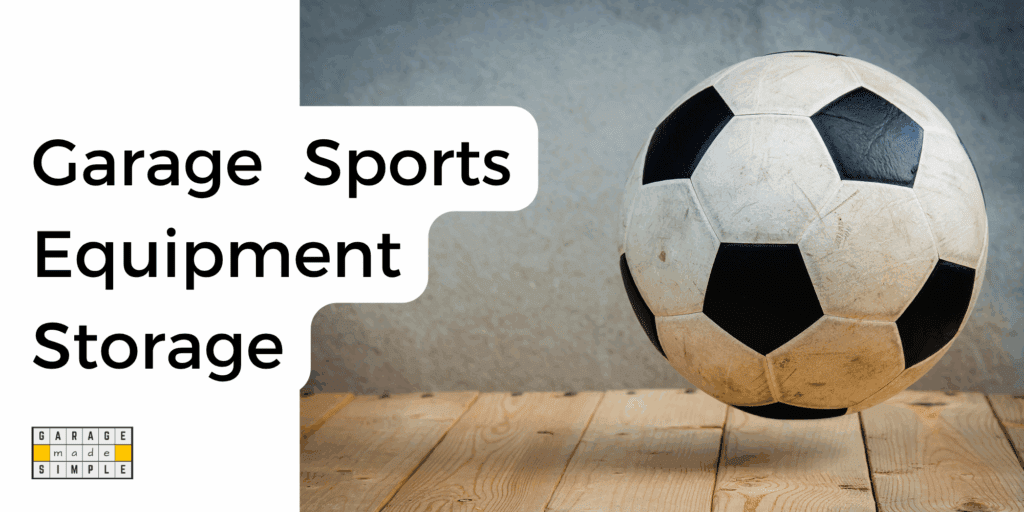
Pretty soon, my garage looked like a sports equipment landfill.
Every time we had to leave for a game or practice, we’d waste ten minutes searching for stuff we swore we just saw.
I finally decided: it’s time to stop tripping over gear and start designing a real garage sports equipment storage system.
No custom carpentry. No overbuilt DIY project.
I just picked a few smart storage products, mapped out the zones we needed, and made sure everything had a place to go back to.
It took a single afternoon and a few clicks on Amazon, and it completely changed how our garage functions.
Here’s how I did it.
🔑 Key Takeaways
- Sort all sports gear by sport and by person before organizing
- Mount balls and bats on the wall to save major floor space
- Use rolling bins for loose or shared items like pads and cones
- Hang bikes, scooters, and helmets to clear walkways
- Give each family member their own shelf, hook, or bin
- Label everything, especially for kids
- Reset weekly to keep the system running without friction
✅ Step 1: Sort the Gear by Sport and User
Before you hang a single hook or buy another bin, you need to know what you’re actually storing.
If you’re like most families, your garage has become a black hole of sports equipment—half of it broken, the other half buried under something else.
So first, pull it all out. Every ball, bag, helmet, and water bottle. Dump it into one big pile and start sorting.
Here’s what to do:
- Sort by sport: soccer, baseball, hockey, basketball, biking, etc.
- Sort by person: once gear is grouped, assign it to the right kid (or adult)
- Toss the junk: deflated balls, cracked helmets, gear they’ve outgrown or haven’t used in a year
Once everything’s sorted, it becomes way easier to design zones that make sense.
✅ Step 2: Create a Vertical Wall Zone for Balls & Bats
If balls are rolling around the garage floor—or stuffed into random bins—you’re wasting space and inviting chaos.
The fix? Use your walls.
Storing sports gear vertically is one of the fastest ways to clear floor space, keep gear visible, and stop the daily game of “Where’s my bat?”
Here’s how I set up our ball + bat zone:
- Mounted a wall ball rack right by the garage entry
- Hung a simple multi-sport hook system for bats, sticks, and racquets
- Left open space under the rack for a rolling bin (for overflow or in-use gear)
Why it works:
- Kids can grab and return gear on their own
- Balls stay off the floor and don’t roll under the car
- You see what’s missing before you leave for practice
This wall setup turned a dead zone into a functioning grab-and-go area—and made Monday night gear hunts a thing of the past.
✅ Step 3: Use Rolling Bins for Shared or Loose Gear
Not everything fits neatly on a wall.
Pads, gloves, cones, pumps, goalie gear, random shin guards—these are the things that float around and cause clutter.
Instead of trying to shelf or stack all that stuff, give it a mobile home.
Why rolling bins work:
- You can pull them out for practice prep and roll them back in when you’re done
- They’re perfect for shared family gear
- No lids means no excuses for not putting stuff back
I keep ours in the center zone of the garage so they’re easy to reach, especially for younger kids who won’t dig through shelves but will toss something into a cart.
If you’ve got multiple kids or multiple sports, add one cart per purpose. Label it, park it under your ball rack, and you’ve just eliminated 80% of your loose gear mess.
✅ Step 4: Hang Bikes, Scooters, and Helmets Safely
If bikes and scooters are crowding your garage floor—or leaning against every available surface—you’re wasting premium space.
The fix? Go vertical.
Mounting bikes, scooters, and helmets on the wall (or ceiling) frees up walking room and keeps gear from tipping, scratching cars, or becoming tripping hazards.
Here’s what I used:
- Bike hoist for my adult bike, I rarely use it
- Wall hooks for kids’ bikes and scooters—mounted low so they can hook them in themselves
- Helmet basket + utility hooks for fast drop-off after a ride or practice

G-Bike Ceiling Mounted Bike Rack
The G-Bike Ceiling Rack organizes up to 4 bikes overhead, holding 250 lbs total (50 lbs/hook).
Made of steel/aluminum with adjustable hooks for various bike types and widths.
Easy to install with included hardware, engineered in the USA for reliable storage.
Why this setup works:
- You’re not parking around bikes or dodging handlebars
- It teaches kids to put their gear away the second they’re done
- Helmets dry out, air out, and don’t get lost
Your garage should feel like a usable space, not an obstacle course.
Hanging the wheels makes a big impact—fast.
✅ Step 5: Assign Space by Family Member
This one’s simple—and powerful.
If everyone’s responsible for “shared space,” no one takes responsibility.
So I gave each person their own zone. A bin, a shelf, a hook. Doesn’t matter what. As long as it’s theirs.
Here’s how I set it up:
- One clear bin per kid (labeled with name and sport)
- A hook or basket for helmets and gear bags
- A shared rack for overflow or weekend grab-and-go stuff
Younger kids got picture labels they could recognize. Older ones? No excuses. Your gear = your spot.
Why this works:
- Kids know where to find and return their stuff
- I’m not the garage manager anymore
- Everyone has ownership, so the system doesn’t fall apart in a week
Assigning space doesn’t just organize the garage. It builds habits.
And it means fewer Saturday mornings spent yelling, “Where’s your gear?!”
✅ Step 6: Make Resetting a Routine
Even the best garage setup won’t last if no one resets it.
That’s why I made clean-up part of the routine, not an afterthought.
I’m not talking about scrubbing the floor or reorganizing shelves every week.
I’m talking about five minutes on Sunday—or right after practice—when gear goes back where it belongs.
Here’s what helps it stick:
- Visible labels—no guessing, no “I didn’t know where it goes” excuses
- One-minute reminders—”Everyone reset your zone before dinner.”
- A “Return Bin”—for dumped gear that hasn’t found its home yet (you can sort it once a week)
Pro Tip for Parents:
Put a small checklist or visual cue near the door:
✅ Helmet
✅ Cleats
✅ Jersey
✅ Water bottle
Even if they don’t read it, it reminds you what to look for before it ends up missing next time.
Bottom line: a storage system only works if it’s easy to use—and even easier to reset.
The routine is what keeps the chaos from creeping back in.
Final Thoughts – Less Chaos, Fewer Fights, More Floor Space
You don’t need custom cabinetry or color-coded bins to get your garage under control.
You just need a system that works for your family—gear zones that make sense, storage you can actually use, and tools that hold up.
This garage sports equipment storage setup didn’t just give us more floor space—it gave us less chaos, fewer last-minute scrambles, and a whole lot more peace.
Start simple. Buy what solves real problems. And build it around how your family lives.
Want to organize the rest of your gear like a pro? Check out: My 12 Essential Garage Organization Supplies List (And 3 to Pass)