My Genius DIY Power Tool Storage Build Explained!
As an Amazon Associate, I earn from qualifying purchases.
For the longest time, my power tools just lived wherever they fit – on shelves, crammed into drawers, scattered on the floor, sometimes buried under a spaghetti of cords.
And every single project kicked off the exact same way: ten minutes of frantic hunting, untangling a mess of wires, and waiting for dead batteries to charge up.
It was pure chaos till I decided to build my own DIY Power Tool Storage Setup!
And in my cluttered garage, that kind of setup doesn’t fly. I didn’t have the luxury of garage clutter.
You really need a system that keeps your tools charged, easily visible, and ready to grab, all without eating up your precious floor space.
So, I decided to build a DIY power tool storage that worked for me.
🔑 Key Takeaways
- Sort tools by use, not just by type
- Separate your charging station from your tool wall
- Pegboards, cleats, and custom racks each have their place
- Keep daily-use tools at eye level and heavy tools down low
- A mobile cart saves time if you work across zones
- Label everything—resetting should be quick and obvious
- Build your system for function, not looks
This post will walk you through my no-frills, incredibly practical DIY power tool storage setup, specifically designed for garages prone to cluttering.
It’s definitely not winning any beauty contests. But, boy, does it work.
Let’s dive in.
Inventory What You Actually Use
Before you even think about hanging a single hook or cutting a piece of plywood, you absolutely have to do this first:
Figure out what you genuinely use.
When I first attempted to set up power tool storage, I made the classic mistake of trying to stash everything. My ancient corded drills. Half-dead sanders.
That jigsaw, I’m pretty sure I used just once, back in 2014. The end result? A wall packed with tools, and hardly any of them were actually useful.
Start by ruthlessly sorting your gear into three distinct piles:
- Core tools: These are your go-to items – your drill, impact driver, circular saw, sander, and so on. You use them constantly.
- Occasional-use tools: You reach for these, but definitely not every week.
- Dead weight: These are the tools you never use, or frankly, they don’t even work anymore.
Be brutal about it. Do not waste valuable wall space on stuff you’re holding onto “just in case.”
You’re designing this for speed and immediate access, not for maximum storage volume.
Pro tip: Group your tools by their function (like cutting, fastening, sanding) and also by their power type (corded versus battery-powered).
This simple step makes it much easier to design a wall layout or a cart setup that genuinely supports the way you actually work.
Design a Charging Zone First
So many people just lump their chargers and tools together on one big shelf.
I used to do that too – until I kept bumping into the same frustrating problems: tangled cords, perpetually dead batteries, and absolutely no clue where the fully charged backups were.
That’s why I made the deliberate decision to separate my charging zone from my main tool storage area – and it has been an absolute game-changer.
Here’s exactly what my charging setup includes:
- A power strip (neatly mounted under a shallow shelf)
- A dedicated wall-mounted battery dock or tray
- A cord organizer (simple Velcro ties or small clips work wonders)
- Clearly labeled slots for distinguishing between fully charged and dead batteries
Now, everything has its dedicated spot, and I can swap out a battery in seconds without having to dig through a cluttered drawer or desperately guess which one’s ready to go.
Why this approach matters so much:
- Charging is an active “flow” task, not just a passive storage one.
- You want to be able to grab, swap, and keep moving – not stop dead in your tracks to untangle a mess.
- Separating these two zones keeps your workbench clear and, more importantly, ensures your tools are always ready for action.
I even went a step further and added a tiny “charging now” shelf – literally just a piece of scrap wood – so I never, ever confuse a dead battery with a charged one again.
Pro Tip:Trust me on this; build your charging station before you even think about mounting a single hook.
Build Smart Wall Storage
Once your charging zone is completely locked in and functional, it’s time to tackle the main event: tool storage that makes logical sense when you’re elbow-deep in a project.
The ultimate goal here? Excellent visibility, truly grab-and-go access, and absolutely zero wasted space.
No digging around. No frustrating guesswork. Just effortlessly grab, use, and return.
Pegboard vs. French Cleats vs. Custom Racks
I’ve personally experimented with all three of these options. Here’s my honest breakdown:
- Pegboard – Fantastic for lighter tools, offers a super flexible layout, and is incredibly quick to set up.
- ✅ Best for: screwdrivers, rolls of tape, drills, smaller saws.
- ❌ Not ideal for: anything particularly heavy.
- French Cleats – Much stronger, wonderfully modular, and surprisingly DIY-friendly to build.
- ✅ Best for: heavier power tools, chargers, and custom combo tool holders.
- ❌ Takes more time: to construct and plan out initially.
- Custom Racks – Specifically built to fit individual tools like drills, sanders, or routers.
- ✅ Best for: maximizing vertical storage, provides an exact, snug fit.
- ❌ Not easily adjustable: if your tool collection changes later.
For my setup, I ended up going with a smart mix of cleats and custom racks – keeping things modular where it made sense, and permanent where a precise fit was crucial.
Wall Layout Tips
- Place your daily-use tools right at eye level for immediate access.
- Store heavier tools lower down – it’s safer and easier on your back.
- Always keep related tools grouped together (e.g., your drill, its bits, and the driver right nearby).
Bonus Storage Helpers:
- Magnetic tool bars – Perfect for pliers, various drivers, and all those tiny bits.
- Drop-in holsters (made from PVC pipe or plywood) – Provides really secure storage for your drills.
- DIY blade racks or sanding disk trays – Say goodbye to loose parts rattling around in drawers.
With this setup, I literally don’t have to think about storage while I’m in the middle of a project.
And when I’m finished? Resetting everything takes a mere 30 seconds.
Add a Mobile Tool Cart (Optional but Powerful)
If you frequently move between different work zones – your workbench, the driveway, out in the backyard – then a mobile tool cart is an absolute game-changer of an upgrade.
I initially didn’t bother building one. Big mistake. I found myself constantly hauling armloads of tools back and forth, dropping bits, and always misplacing my square.
Now, I simply roll my entire kit right to where the job is and back again. Zero effort, zero mess.
Here’s what my cart typically holds:
- Top tray: My drill, impact driver, tape measure, pencil, and safety glasses – all the absolute essentials.
- Drawer: Screws, various bits, and other fasteners.
- Side hooks: Clamps and an extension cord.
- Bottom shelf: Glue, caulk, and extra batteries.
Why this system works so well:
- It drastically cuts down on steps and initial setup time.
- Keeps everything neatly together for projects currently in progress.
- Makes it incredibly easy to restock, clean up, and get ready for the next job.
And you don’t even need to build a mobile tool cart from scratch. Just order one from Amazon. Take your pick. They are typically priced between $100 and $250.
Label Everything and Lock It In
Here’s the plain truth about power tool storage: even the most brilliantly designed system will eventually fall apart if you (or anyone else using it) can’t easily remember where everything belongs.
That’s precisely why labeling is so incredibly important.
It’s not just about looking neat – it’s about saving precious time and actively preventing garage clutter from creeping its way back in.
Label Like This:
- Pegboard outlines: Simply trace or tape around the shapes of your tools for super-fast returns.
- Bin labels: For screws, sanding disks, drill bits, blades – just write the contents clearly on the front.
- Drawer edges: Masking tape plus a Sharpie works absolutely fine and gets the job done.
- Battery dock: Mark slots as “charged” or “needs charge” if you’re rotating battery packs.
Bonus Tip: Use color codes for different zones
- One color for all your drill and driver-related items.
- Another color for saws.
- And yet another for sanding or polishing supplies.
You really don’t need a fancy label maker for any of this. You just need a practical system that allows you to find and return your tools without having to think twice about it.
The easier it is to reset your wall or your cart, the far more likely you’ll actually stick with it. That’s the real secret to keeping the chaos out – for the long haul.
Final Thoughts: Keep it Simple & Easy to Use
Power tool storage isn’t about making your garage look like something out of a magazine – it’s fundamentally about keeping your gear ready, visible, and fully operational precisely when you need it.
The setup I ended up building isn’t anything fancy. But it works.
My tools now have proper homes. My batteries consistently stay charged. And my projects no longer kick off with a frustrating fifteen-minute scavenger hunt.
If you’re currently battling garage clutter, constantly finding dead batteries, or have tools haphazardly scattered across shelves, then it’s time to build a system that genuinely fits you.
Keep it straightforward. Make it utterly usable. Then, you can always upgrade it gradually as you go.
Because a truly good storage system doesn’t just hold your tools – it actively helps you work better, faster, and smarter.
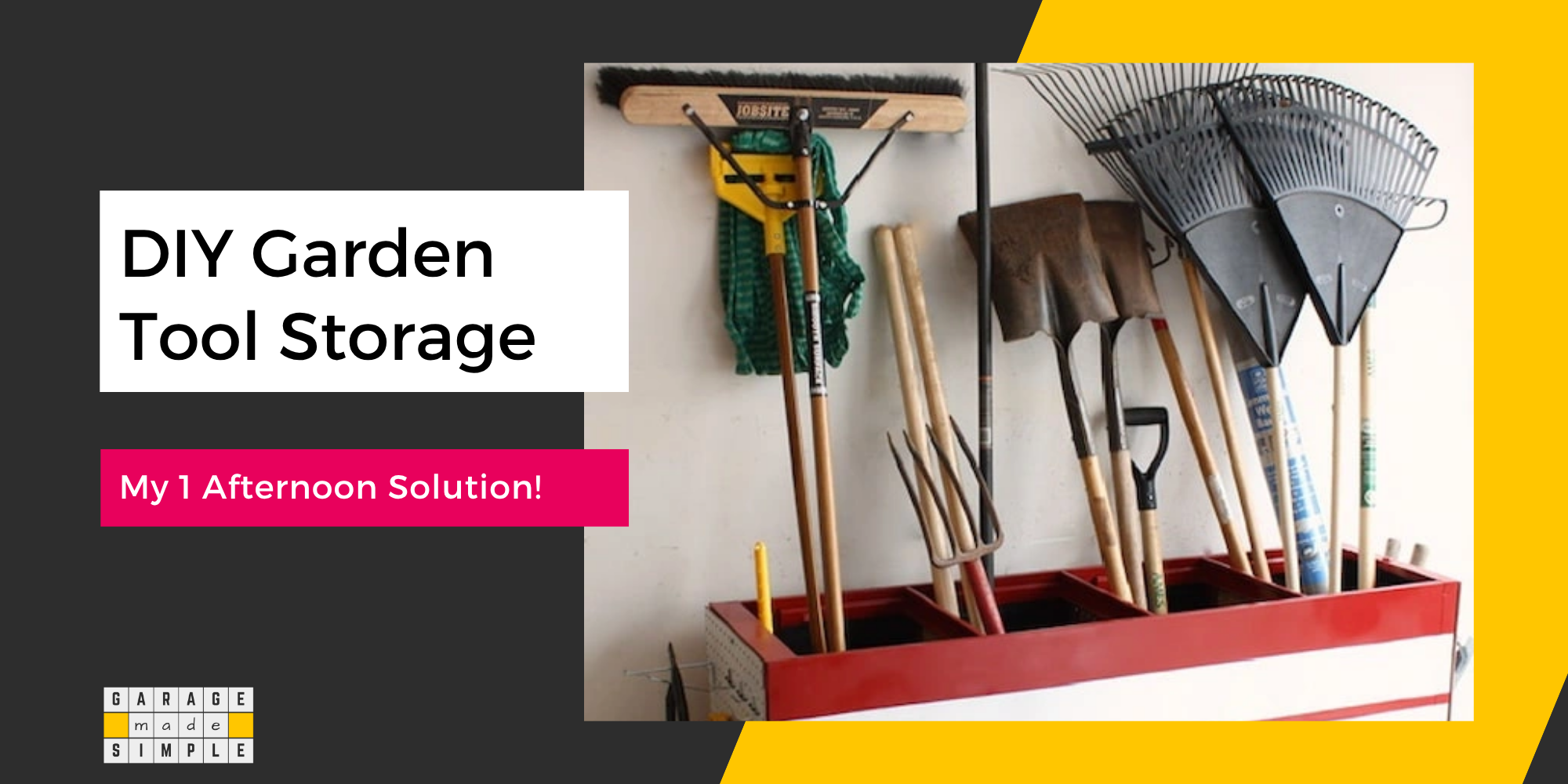
Tired of your rakes and shovels constantly toppling over every single weekend?
Check out: [DIY Garden Tool Storage: From Pile to Practical in One Afternoon]